
Learn how a virtual office protects your privacy during business incorporation. Keep your home address off public state records and boost your professional image.

The Hidden Privacy Trap of Starting Your Own Business
Starting a business is one of the most exciting moves you can make. You have the vision, the product, and the drive to make it happen. You sit down at your desk, open up the state filing website to incorporate your new LLC, and start filling out the forms. It feels like a standard procedure until you hit the section asking for your business address. Most new entrepreneurs do not think twice and type in their home address. After all, that is where the work is happening. However, what most people do not realize is that they are essentially putting a digital billboard over their front door for the entire world to see.
When you file those incorporation documents, they become part of the official state records. These records are not just stored in a dusty cabinet in a government building; they are digitized and made searchable for anyone with an internet connection. This is where the concept of a virtual office becomes a game-changer for your privacy and your brand. Many people think of a virtual office as just a fancy way to get a mailbox, but it is actually a comprehensive privacy shield that protects your personal life while you build your professional one.
The Reality of Public State Records
Most people value their privacy, especially in a world where personal data is traded like a commodity. When you use your home address for your incorporation papers, you are linking your private residence to your commercial entity forever. Every Secretary of State website, including the New York Department of State, has a search function where a disgruntled customer, a competitor, or a random person can look up your company name and see exactly where you live.
This visibility creates a few immediate problems. First, you will almost certainly be hit with a wave of physical junk mail. There are dozens of companies that spend their entire day scraping state records for newly formed businesses so they can send you high-priced insurance offers, credit card solicitations, and fake invoices. Second, there is the safety factor. If you run an e-commerce store or a service business and a customer is unhappy, you probably do not want them showing up at your house to vent their frustrations. A virtual office acts as a professional buffer, ensuring that your business life stays at the office and your personal life stays at home.
What a Virtual Office Actually Is
If you have never heard of a virtual office, you might be wondering how it differs from a standard PO Box. This is a crucial distinction. Most states and banks will not allow you to use a PO Box as your principal place of business when you are incorporating. They require a physical street address where the company can be found or served with legal papers.
A virtual office gives you exactly that. It is a real, physical office building where a provider leases you the right to use their address as your own. When someone looks up your company in the state records, they see a prestigious office building in a commercial district instead of your suburban street or apartment building. The provider handles your mail, and many offer services like mail scanning, where they upload your letters to a secure portal so you can read them from anywhere in the world. It is the perfect blend of a physical presence and a remote lifestyle.
Professionalism and the 5th Avenue Perception
Beyond the privacy aspect, there is the matter of credibility. If you are trying to land a major contract or impress a potential investor, your business address matters. When a potential client Googles your address and sees a house with a swing set in the front yard, it might subconsciously change their perception of your company's scale and stability.
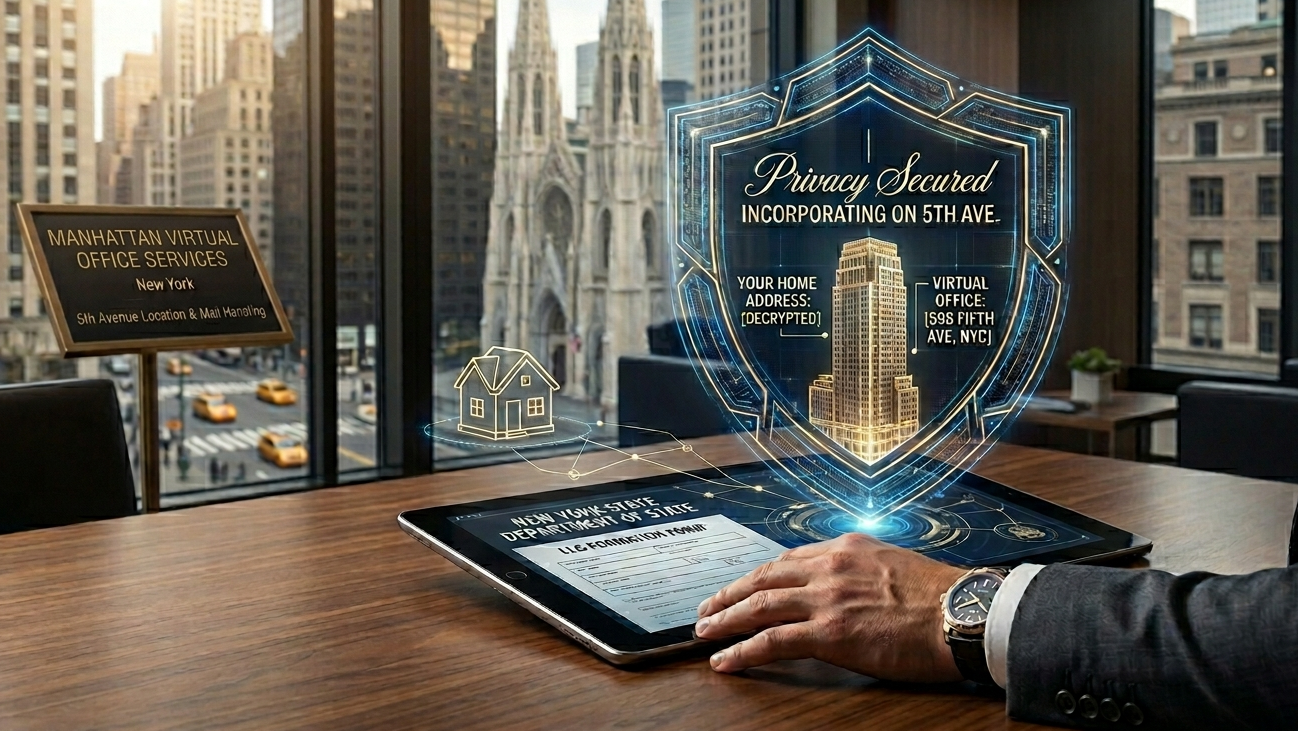
By using a virtual office, you can position your business in a high-end commercial hub like Manhattan. Having an address on 5th Avenue instantly elevates your brand. It tells the market that you are a serious professional with a legitimate corporate presence. You get the benefit of a high-end office without the five-figure monthly lease, the utility bills, or the need to buy office furniture. For a startup, this is the most cost-effective way to look like an established player from day one. It creates a level of trust that is hard to build when you are operating out of a residential neighborhood.
Ease of Setup and Long-Term Flexibility
One of the best things about opting for a virtual office is how incredibly easy it is to set up. While leasing a traditional office space can take months of negotiations and paperwork, you can usually secure a virtual office address in less than twenty-four hours. This is vital when you are in the middle of incorporating and need an address immediately to finish your filing.
It also offers a level of flexibility that home-based addresses cannot match. If you move to a new house or even a new state, you do not have to go through the headache of updating your business address with the state, the IRS, your bank, and every one of your vendors. Your virtual office address stays constant, providing a stable foundation for your business identity regardless of where your life takes you. This consistency is not just a convenience; it prevents potential administrative errors that could lead to legal or tax issues down the road.
Protecting What Matters Most
Choosing a virtual office is one of those small decisions that has a massive impact on your long-term peace of mind. It keeps your home off the public radar, keeps the scammers at bay, and gives your business the professional polish it deserves. As you prepare to take the leap into entrepreneurship and navigate the complexities of state records, make sure your first move is protecting the very home you are working so hard to build for. Using a virtual office is not just a convenience; it is a smart, strategic step for any modern business owner who values their privacy.